Car Suspension Issues: Signs & Solutions in Franklin, MA
Car Suspension Issues: Signs & Solutions in Franklin, MA
Your car’s suspension does more than make the ride feel smooth. It helps keep the tires planted, the vehicle stable, and the steering predictable when you brake, turn, or drive over rough pavement. When suspension system problems start, the symptoms can feel minor at first, but they often become safety concerns if they are ignored.
Whether you noticed a new clunk after a pothole, uneven tire wear after months of commuting, or a vehicle that feels loose on roads near Grove Street, Franklin MA, knowing what to look for can help you act early. This guide explains the most common car suspension problems signs, how to do a basic check, and when it is time to get a professional diagnosis.
What are the most common signs of suspension issues?
The most common signs of suspension issues include excessive bouncing, pulling to one side, uneven tire wear, a sagging corner, nose-diving while braking, clunking noises, and steering that feels loose or unusually stiff. These car suspension problems symptoms can come from worn shocks, struts, springs, bushings, ball joints, control arms, sway bars, or related steering and alignment components.
A suspension issue is not always dramatic. Sometimes the first clue is simply that your car no longer feels as controlled as it used to. You may feel extra movement after a bump, hear a noise only on turns, or notice that one tire is wearing faster than the others. Because suspension problems car owners notice can overlap with tire, brake, and alignment issues, the goal is to spot warning signs early rather than guess the exact failed part.
A rough or bouncy ride is an early warning
A healthy suspension absorbs road movement and helps the tires stay in contact with the pavement. If your car keeps bouncing after crossing a speed bump, feels floaty on the highway, or rocks more than usual over uneven roads, the shocks or struts may be worn.
This does not only affect comfort. Extra bouncing can reduce control because the tire may not stay firmly planted during braking or cornering. In wet weather, on rough pavement, or during sudden stops, that loss of stability can become more noticeable.
Pay attention to changes in how the ride feels over familiar roads. If a stretch you drive every day suddenly feels harsher, noisier, or less stable, it may be one of the first car suspension problems signs worth checking.
Pulling, drifting, and uneven steering deserve attention
If the vehicle pulls to one side, wanders in its lane, or feels difficult to keep straight, suspension damage may be involved. Pulling can also come from tire pressure, uneven tire wear, brake drag, or wheel alignment, so it is not proof of car suspension failure by itself. Still, it should not be ignored.
A hard pothole hit, curb impact, or minor collision can bend or loosen suspension and steering components. When that happens, alignment angles may shift and the car may no longer track properly. You might notice the steering wheel sits off-center, the vehicle drifts after you let go lightly, or the car feels unstable around curves.
Do not assume an alignment alone will solve the issue. If a worn ball joint, damaged control arm, weak strut, or bad bushing is causing the alignment problem, the underlying suspension repair needs to happen first.
Uneven tire wear can reveal hidden suspension trouble
Your tires often show evidence of automobile suspension problems before the ride feels obviously unsafe. Look for wear that appears heavier on one edge, patchy across the tread, or different from one tire to another. Cupping, which looks like scalloped dips around the tire, is commonly associated with bouncing or poor tire contact.
Uneven tire wear matters because it can shorten tire life and reduce grip. It also suggests that the tire is not meeting the road evenly, which can affect braking and handling. If you recently rotated your tires and one position is wearing unusually fast, that corner of the vehicle may need closer inspection.
A quick monthly tire check can catch problems early. You do not need special tools to notice obvious feathering, bald edges, cracks, bulges, or tread patterns that do not match across the axle.
Vehicle sagging, leaning, or dipping points to load-control problems
A car that sits lower on one corner, leans to one side, or looks nose-down while parked may have a spring, strut, or related support problem. Springs carry the vehicle’s weight, while shocks and struts help control movement. When these parts weaken or fail, the vehicle may no longer sit level.
You may also feel the front end dive sharply when braking or the rear end squat when accelerating. Some movement is normal, especially during heavy braking, but a sudden increase is a warning sign. Excessive dipping can change weight distribution and make the vehicle feel less stable in quick stops.
If the car bottoms out over dips or driveway entrances, take it seriously. Bottoming out can stress other components and may indicate the suspension can no longer manage normal road movement.
Noises over bumps and turns should not be dismissed
Suspension noises are often described as clunks, rattles, squeaks, creaks, knocks, or popping sounds. A clunk over bumps may point to worn bushings, ball joints, sway bar links, or strut mounts. A squeak may come from rubber components, dry joints, or parts moving in ways they should not.
Noise alone does not identify the exact repair, but it does tell you something has changed. Listen for when it happens. Does it occur over bumps, during turns, while braking, or when entering a driveway at an angle? The timing can help a technician narrow down the source.
A repeating metal-on-metal sound, loud knock, or sudden new noise after an impact deserves prompt inspection. Suspension components work together, and one loose or worn part can add stress to others.
How can you check your car suspension system at home?
You can do a basic at-home check by observing the vehicle stance, inspecting tires, listening for noises, looking for visible leaks or damage, and trying a careful bounce test. This does not replace a professional inspection, but it can help you understand whether suspension system problems may be developing.
Here is a practical DIY checklist for how to check car suspension system concerns before scheduling service:
- Park on level ground and look at the vehicle stance. Step back and compare all four corners. A noticeable lean, sag, or uneven wheel gap can point to spring or strut issues.
- Inspect tire wear. Look for edge wear, cupping, bald spots, or one tire wearing faster than the others. Check tire pressure too, because low or uneven pressure can mimic some symptoms.
- Look around the wheels. Without crawling under an unsafe vehicle, check for obvious broken parts, hanging components, damaged rubber boots, or fluid leaking down a shock or strut.
- Try a gentle bounce test. Press down firmly on the front or rear of the vehicle and release. If it continues bouncing several times instead of settling quickly, worn shocks or struts may be involved.
- Pay attention during a short drive. On a safe route, notice whether the vehicle pulls, clunks, sways, nose-dives, or feels unstable. Avoid testing aggressively or making sudden maneuvers.
- Write down what you noticed. Include when the symptom happens, the speed, the road condition, and whether it started after a pothole, curb strike, or heavy load.
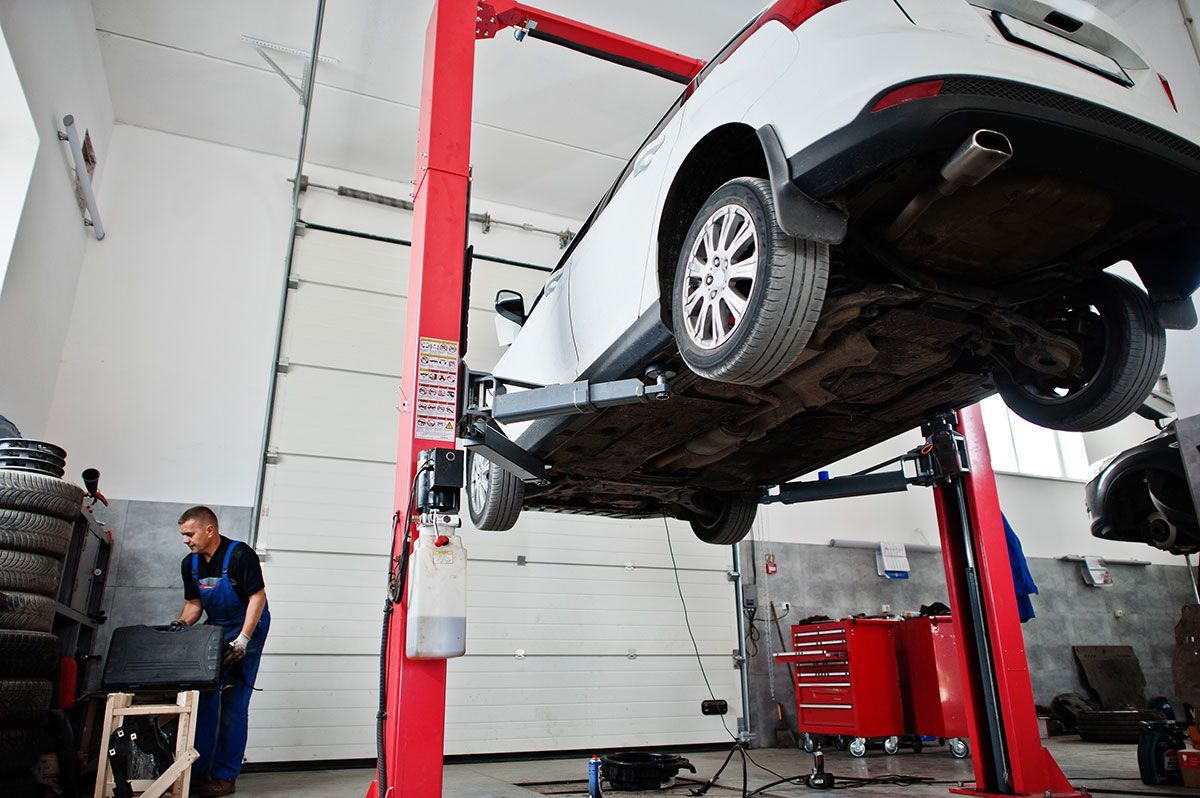
If anything looks broken, loose, leaking, or severely uneven, do not keep driving as if nothing is wrong. A professional lift inspection allows a technician to check play in joints, inspect bushings, evaluate shocks and struts, and confirm whether the issue is suspension, steering, tires, brakes, or alignment.
What causes suspension problems in a car?
Suspension problems in a car are commonly caused by normal wear, potholes, curb impacts, collisions, overloading, rough driving, corrosion, and neglected maintenance. Over time, rubber bushings crack, joints loosen, shocks and struts lose effectiveness, and springs can weaken or break.
Road conditions play a major role. Hitting a deep pothole can damage a tire, wheel, control arm, strut, or alignment setting in a single moment. Repeated rough-road driving can also wear parts gradually, especially if the vehicle regularly carries heavy cargo or tows loads beyond its intended use.
Age matters too. Even if a vehicle has not been driven harshly, rubber and fluid-filled components can deteriorate. That is why symptoms should be judged by condition and performance, not mileage alone.
Safety risks increase when suspension issues are ignored
Car suspension failure can affect braking distance, steering control, tire contact, and stability during emergency maneuvers. A worn suspension may make the vehicle feel unpredictable, especially on wet roads, uneven pavement, highway curves, or sudden stops.
The risk is not limited to one broken part. Worn shocks can contribute to uneven tire wear. Damaged bushings can affect alignment. A loose joint can make steering less precise. The longer you drive with a problem, the more likely it is that related components will experience additional stress.
Consider the severity in stages:
- Early signs: Slightly rough ride, minor squeaks, mild drifting, or early tire wear.
- Moderate signs: Repeated bouncing, visible uneven tire wear, clunks over bumps, nose-diving, or a corner sitting low.
- Serious signs: Bottoming out, strong pulling, loud knocking, unstable steering, visible broken components, or the feeling that the car is hard to control.
If steering control changes suddenly, the vehicle feels unsafe, or a wheel area makes a loud grinding or banging sound, stop driving when it is safe and arrange help. Some symptoms can wait for a scheduled appointment, but loss of control or obvious damage should be treated urgently.
Simple habits can help protect your suspension
You cannot avoid every pothole or rough road, but you can reduce avoidable wear. Slow down before speed bumps, railroad crossings, and broken pavement instead of braking hard at the last second. Give yourself room to steer around potholes when it is safe, and avoid striking curbs while parking.
Keep tires properly inflated and rotate them as recommended for your vehicle. Tires are part of the ride-control system, and poor tire condition can make suspension symptoms worse or harder to diagnose. If you often drive on rough roads around Grove Street, Franklin MA, or similar local routes, regular tire and suspension checks are especially worthwhile.
Also be mindful of load. Carrying excessive weight can strain springs, shocks, struts, and bushings. If the rear of the vehicle squats heavily with cargo or passengers, reduce the load and have the suspension inspected if the stance does not return to normal afterward.
When to schedule a professional suspension inspection
Schedule an inspection when symptoms are persistent, worsening, or tied to a recent impact. You should also get help if you notice uneven tire wear, pulling, leaking shocks or struts, visible sagging, clunking noises, or a ride that feels unstable.
A professional diagnosis is valuable because many symptoms overlap. What feels like suspension may be tire imbalance, brake trouble, wheel bearing wear, steering looseness, or alignment change. A technician can check the full system instead of replacing parts based on guesswork.
The main takeaway is simple: suspension problems rarely improve on their own. If your car feels bouncy, noisy, uneven, or harder to control, treat it as a warning. Early attention can help protect your tires, improve ride comfort, and, most importantly, keep the vehicle safer and more predictable on the road.